
Edward Stott - Evening
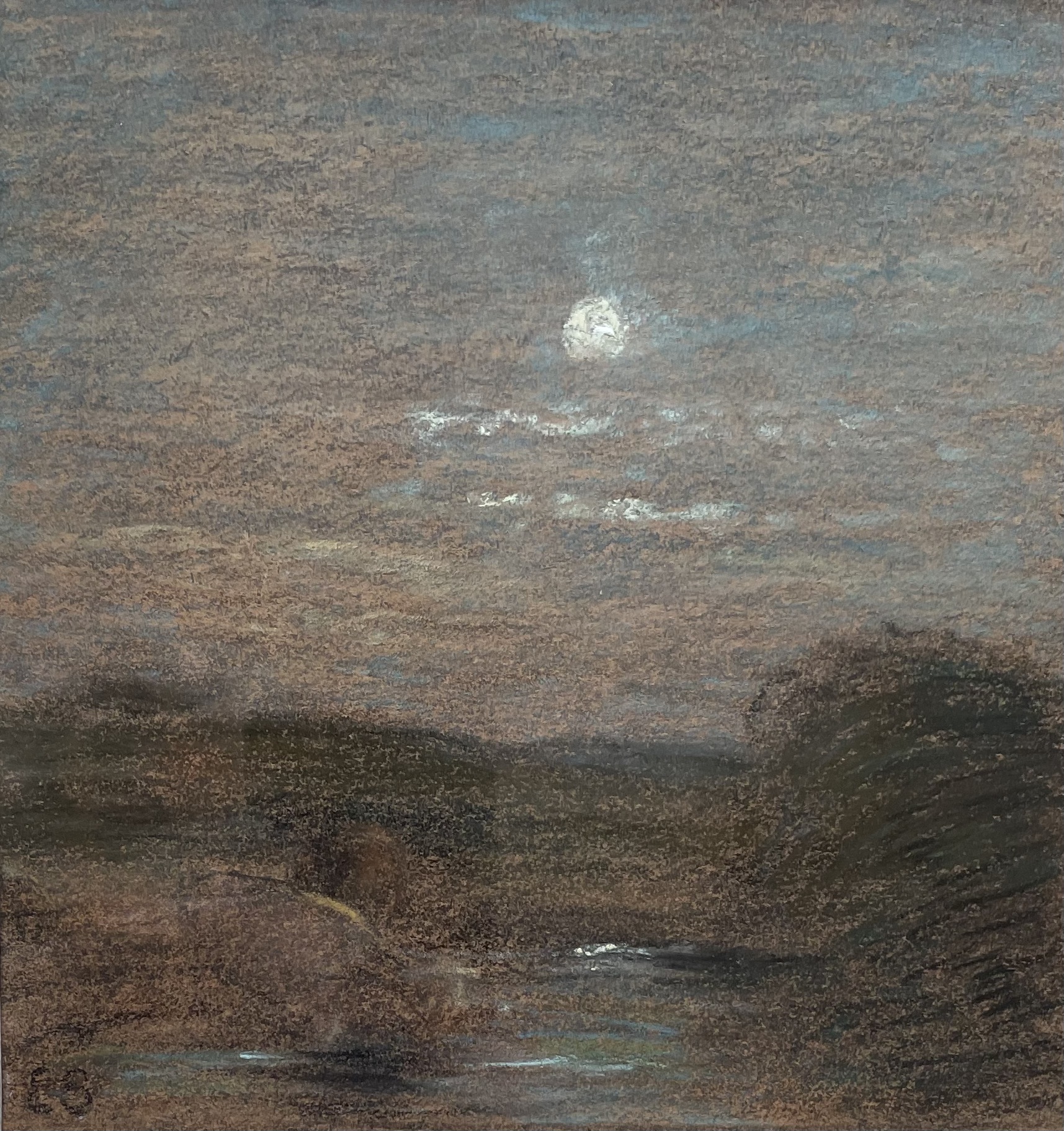
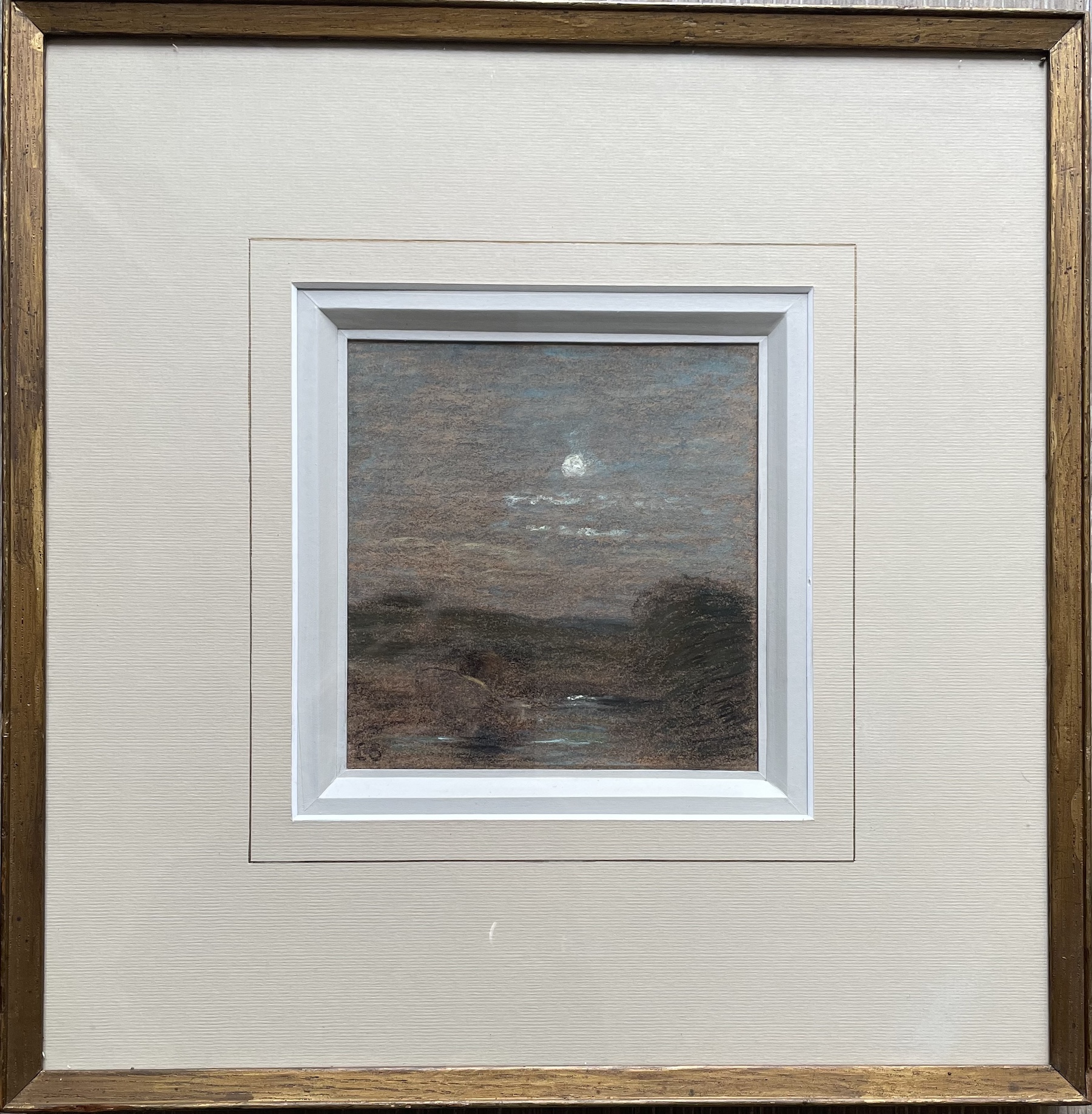
Edward Stott - Evening
EDWARD STOTT, ARA, NEAC
(1859-1918)
Summer Moon
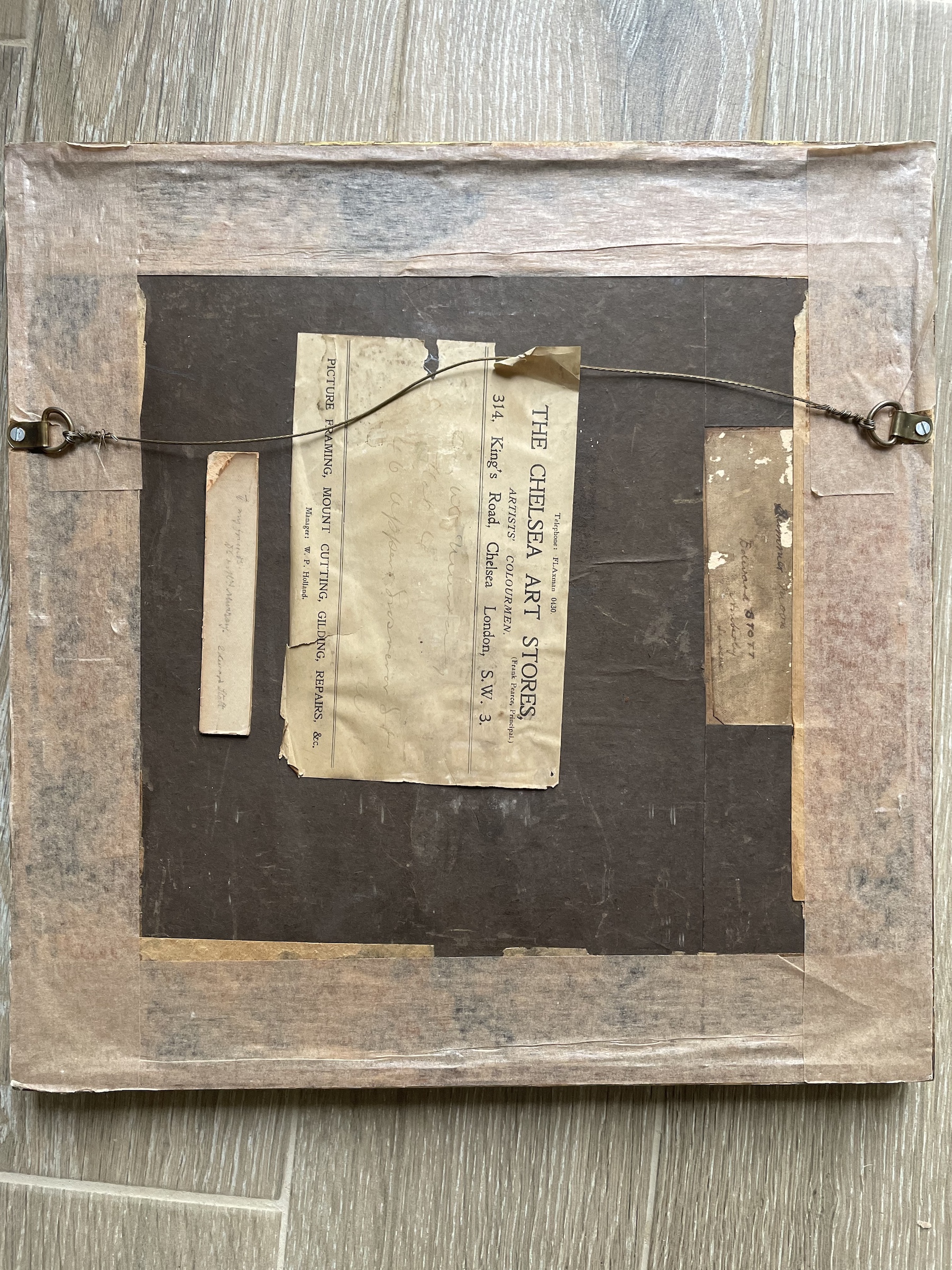
Signed with initials and inscribed by the artist on a label on the backboard
Pastel
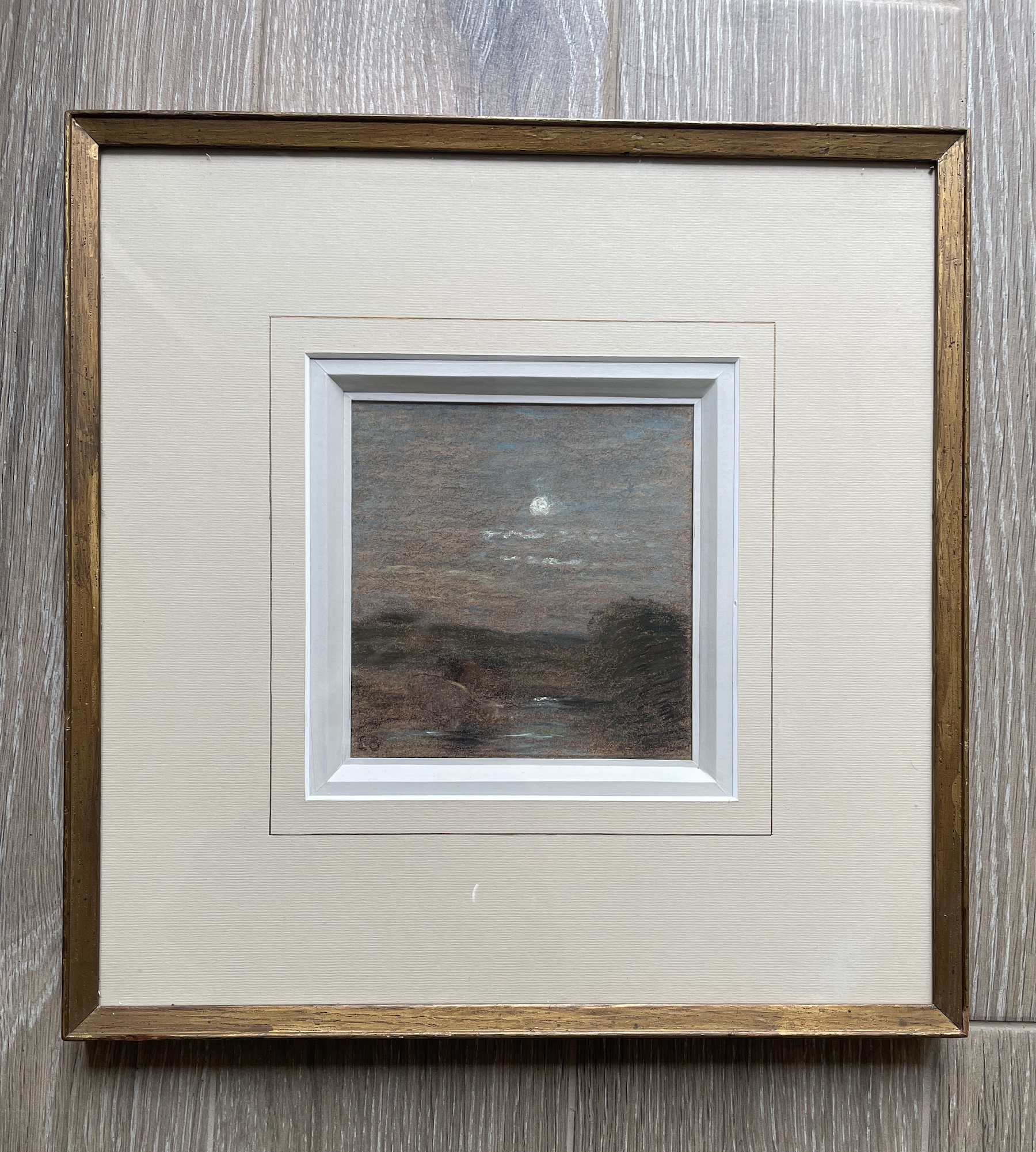
Framed
5 ¾ by 5 ½ in., 14.5 by 14 cm.
(frame size 14 ½ by 14 ¼ in. 37 by 36 cm.)
Provenance:
A gift from the artist to Dr & Mrs W Murray;
John Starling;
John Byrne collection.
Stott was born in Rochdale, the son of a mill-owner and mayor of the town. In 1880 he moved to Paris to study under Carolus-Duran and at the Ecole des Beaux Arts under Cabanel, where he was a contemporary of Philip Wilson Steer. Along with Clausen and La Thangue, he was influenced by the plein air painting of Bastien-Lepage and Millet and chose landscapes and rustic peasant life for his subjects. On returning to England, he initially lived in Evesham, Worcestershire but in 1889 he settled in Amberley, Sussex and the rural village and surrounding countryside of the South Downs provided most of his inspiration.
Known for his beautiful atmospheric paintings of rural life and religious subjects he can be considered to be one of the leading British Impressionist artists. He first exhibited at the Royal Academy in 1883 and was elected an Associate Royal Academician in 1906. His works are in many public collections.
RELATED ITEMS




Summer MoonSigned with initials and inscribed by the artist on a label on the backboardPastelFramed5 ¾ by 5 ½ in., 14.5 by 14 cm.(frame size 14 ½ by 14 ¼ in. 37 by 36 cm.)Provenance:A gift from the artist to Dr & Mrs W Murray;John Starling;John Byrne collection.Stott was born in Rochdale, the son of a mill-owner and mayor of the town. In 1880 he moved to Paris to study under Carolus-Duran and at the Ecole des Beaux Arts under Cabanel, where he was a contemporary of Philip Wilson Steer. Along with Clausen and La Thangue, he was influenced by the plein air painting of Bastien-Lepage and Millet and chose landscapes and rustic peasant life for his subjects. On returning to England, he initially lived in Evesham, Worcestershire but in 1889 he settled in Amberley, Sussex and the rural village and surrounding countryside of the South Downs provided most of his inspiration. Known for his beautiful atmospheric paintings of rural life and religious subjects he can be considered to be one of the leading British Impressionist artists. He first exhibited at the Royal Academy in 1883 and was elected an Associate Royal Academician in 1906. His works are in many public collections.)