
Sidney Herbert Sime - The Scene Shifter
Sidney Herbert Sime - The Scene Shifter
2248
SIDNEY HERBERT SIME, RBA
(1867-1941)
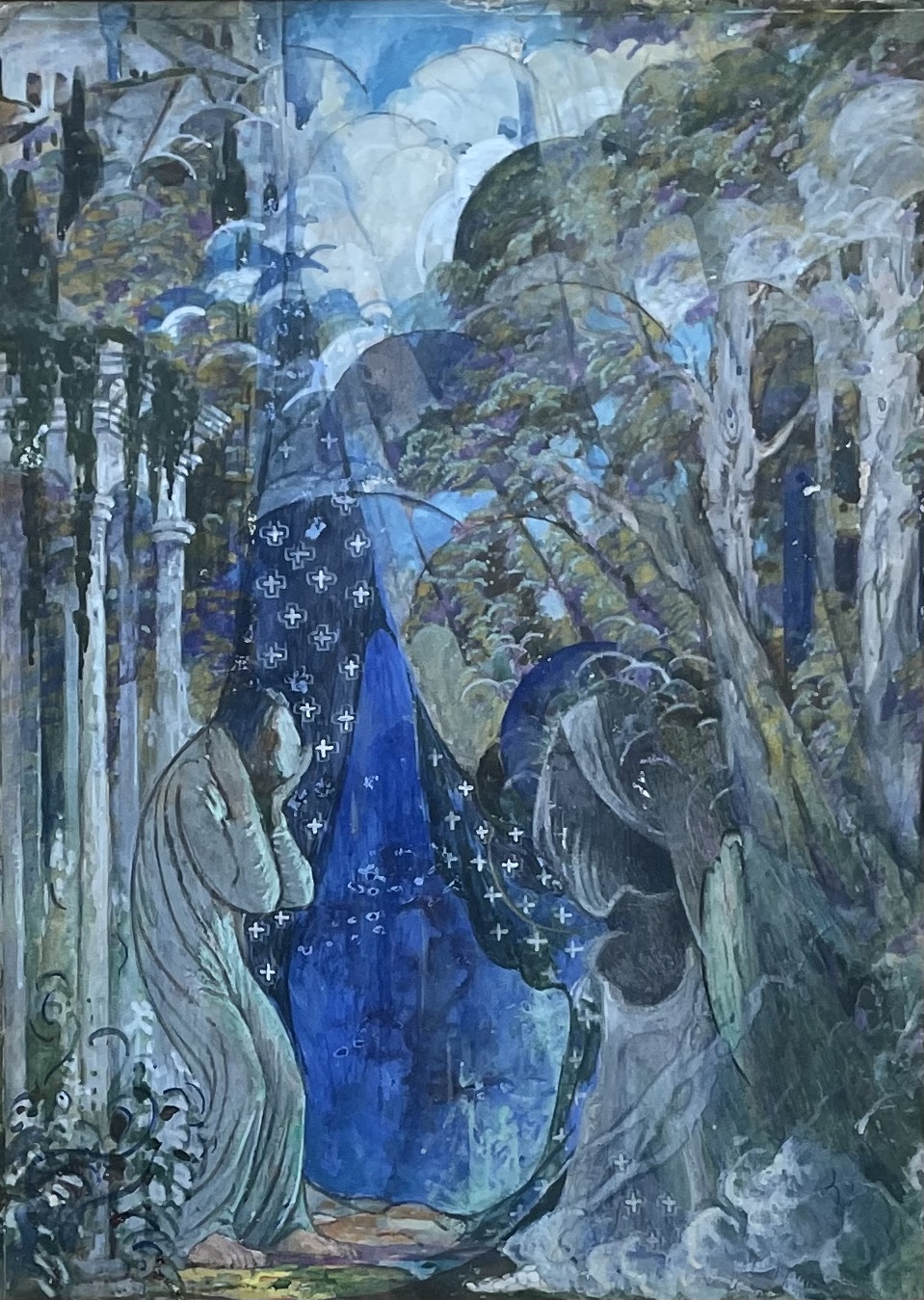
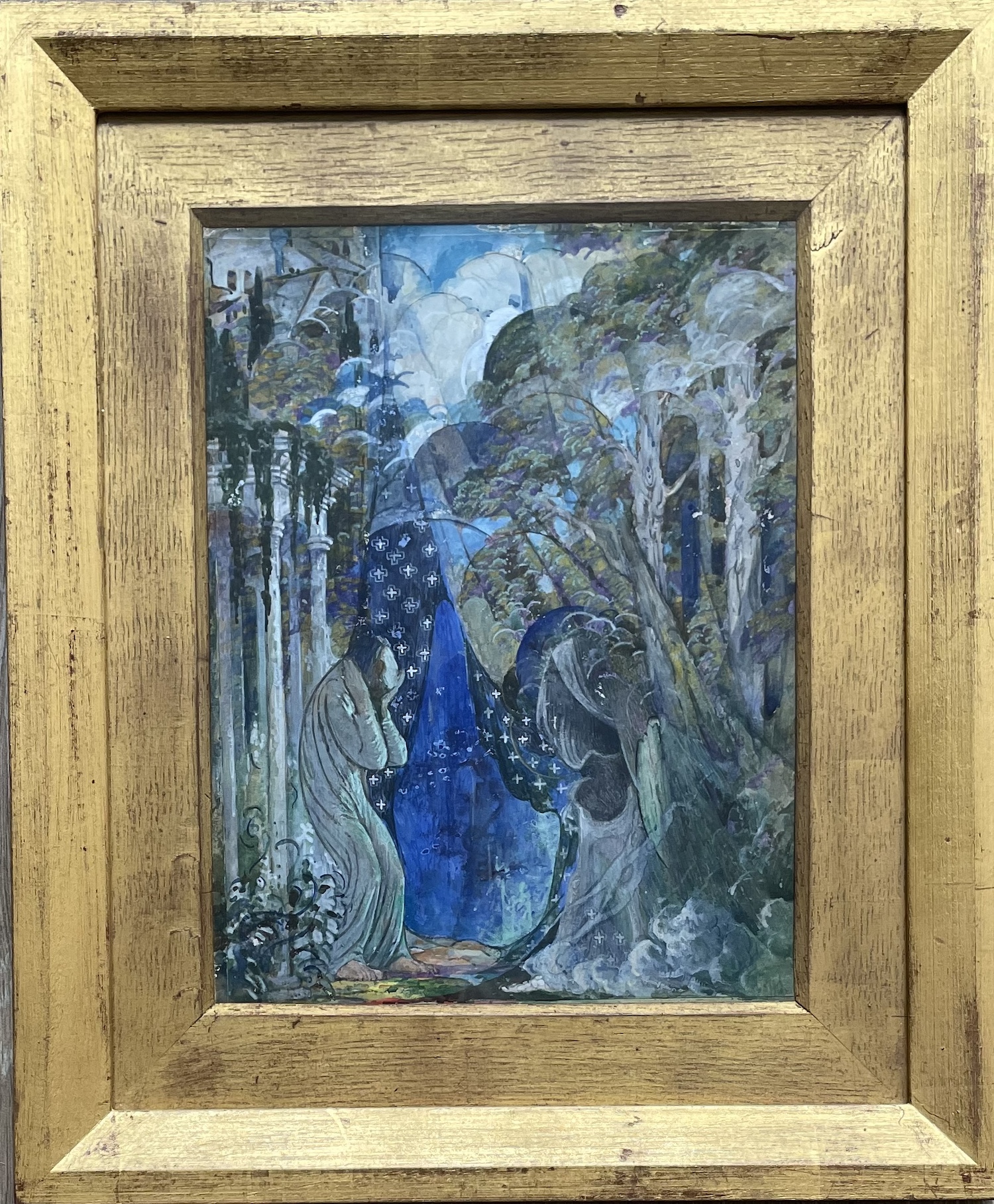
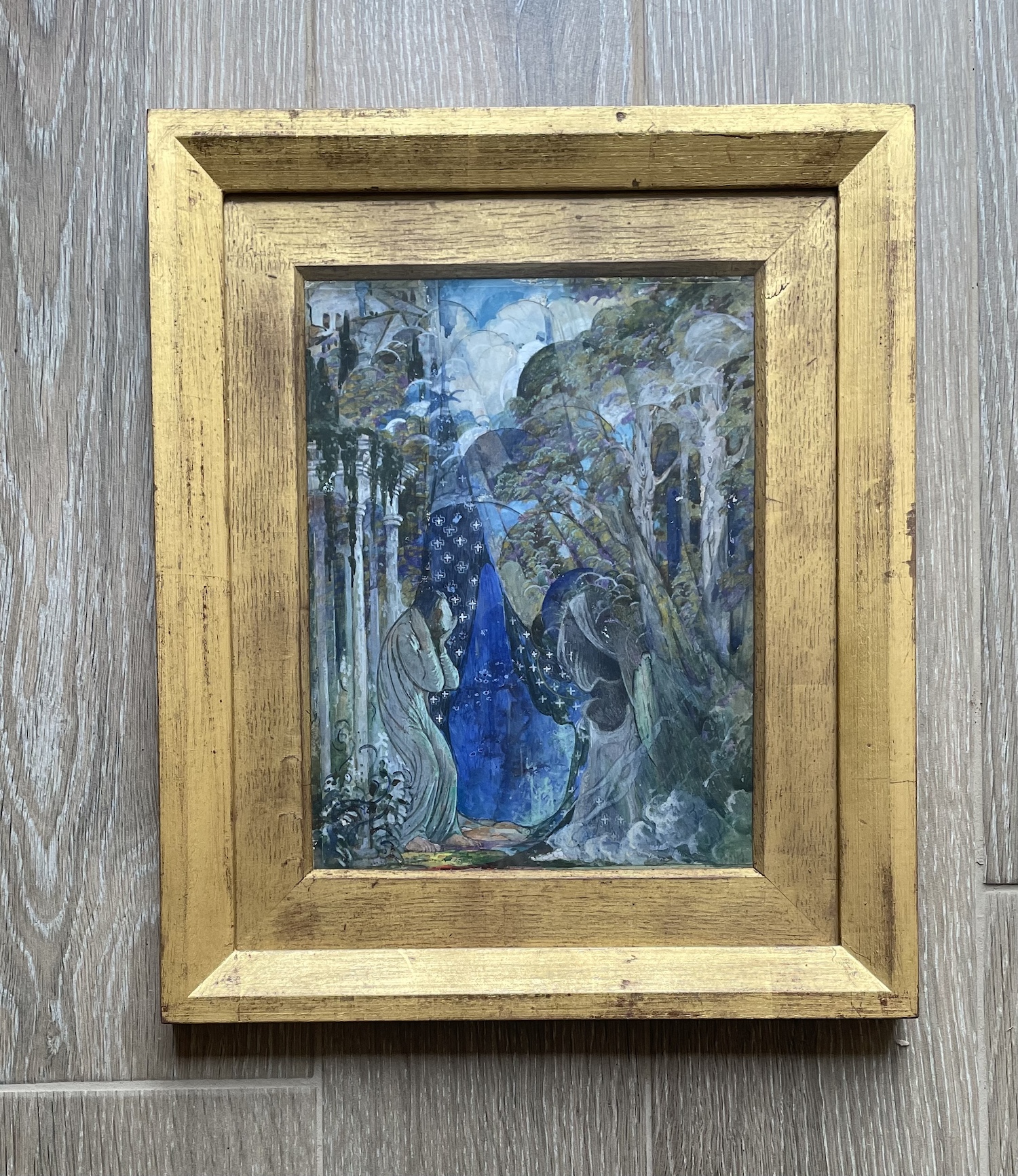
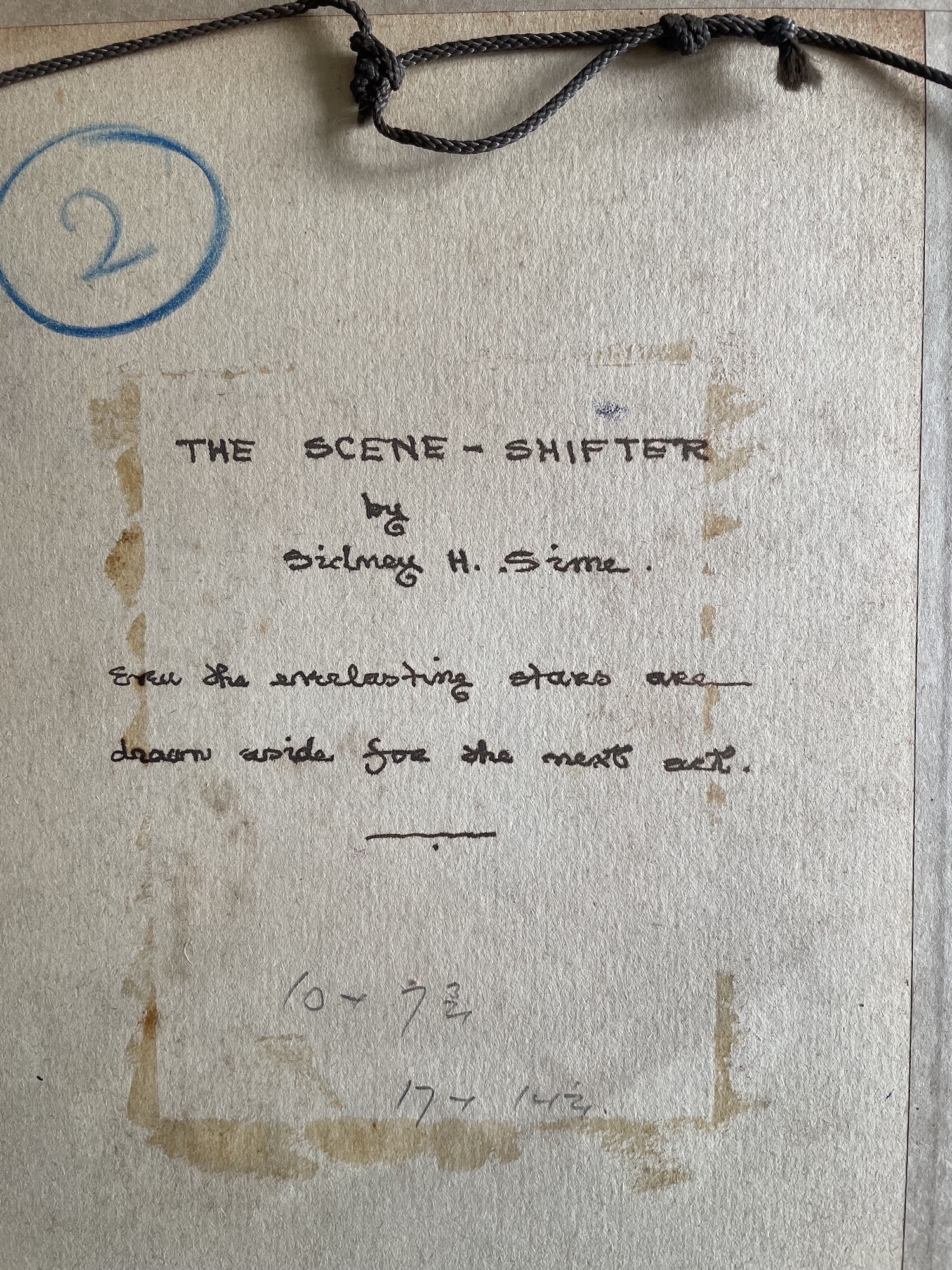
The Scene Shifter
“Even the Everlasting Stars are Drawn aside for the Next Act”
Signed and inscribed with title on the reverse (beneath the backboard)
Watercolour and bodycolour
Framed
26.5 by 20 cm., 10 ½ by 8 in.
(frame size 40 by 33.5 cm., 15 ¾ by 13 ¼ in)
Sime was a great admirer of the William Blake and the present mystical work clearly shows the influence of the great artist and poet. In The Graphic of 1922, the critic Hannen Swaffer called Sime “probably the greatest imaginative English artist since Blake”
Sidney Herbert Sime was born in Manchester. As soon as he was old enough, he went to work in the Yorkshire pits and becoming familiar with the myths and folklore of the miners he was making little drawings of imps and goblins from an early age. Moving from the pits he took a job as a sign-writer and was successful enough to be able to enter the Liverpool School of Art. In 1889 his first picture, a portrait of Henry Peet, was exhibited in the Walker Art Gallery’s Autumn Exhibition.
Once his studies at Liverpool were completed, he set up as an illustrator, contributing to many magazines including the Illustrated London News, Pall Mall Magazine, Graphic, Tatler, Strand, Pick-Me-Up and The Idler, which was then edited by Jerome K. Jerome. It was for The Idler that in 1897/8 he produced his first set of bizarre drawings for From an Ultimate Dim Thule. In 1898 he married Mary Susan Pickett, a miniature painter, and inherited money and property from is deceased uncle enabling him to set up a studio in King’s Road, Chelsea with second home in Scotland and later in Worplesdon, near Guildford, Surrey. In 1899 he purchased and edited The Idler for a short time.
In 1896 Sime was elected a member of the Royal Society of British Artists. A member of London’s Sketching Club and the Yorick Club, Sime was a congenial and sociable man; Dudley Hardy, Augustus John, Walter Bayes being among is close friends. An avid reader, he was devoted to the works of Poe, Heine, De Quincey and Meredith and their writings had a great influence on his macabre and sometimes sinister work. Lord Dunsany, an Irish peer and owner of Dunsany Castle, was a central figure in Sime’s life. Dunsany was an admirer of classic fairy tales and legends, writing his own fantastic tales of wild imagination which he asked Sime to illustrate. Through Dunsany he met Lord and Lady Howard de Walden who were to become great collectors of his work. In 1905 he visited the USA on the invitation of William Randolph Hearst, having already done some illustration work for him, however this connection was short lived as he returned to London in order to work on his ten illustrations for Dunsany’s book Time of the Gods. In 1909 he worked with Caley Robinson on the sets of Maeterlinck’s The Blue Bird.
In 1918 Sime was called up and spent time in the Army Service Corp on the east coast of Britain. Not suited to this life he developed a duodenal ulcer and was invalided out on Armistice Day. At this time he developed a passion for painting in oils and became obsessed with the visions of St John in the Book of Revelation and painted his own visions of the Apocalypse. In 1924 he staged a well-received exhibition at St George’s Gallery, London, followed by another in 1927. These exhibitions were forced upon him for commercial reasons as he found he was receiving less and less commissions for illustrations. His financial situation becoming so serious that Lord Dunsany was moved to write to Sir Kenneth Clarke enquiring if it would be possible to get some sort of pension for Sime as he was nearing sixty and without regular income. In later years Sime became somewhat of a recluse and died at his home in Worpelesdon in 1941.
RELATED ITEMS



The Scene Shifter “Even the Everlasting Stars are Drawn aside for the Next Act”Signed and inscribed with title on the reverse (beneath the backboard)Watercolour and bodycolourFramed26.5 by 20 cm., 10 ½ by 8 in.(frame size 40 by 33.5 cm., 15 ¾ by 13 ¼ in)Sime was a great admirer of the William Blake and the present mystical work clearly shows the influence of the great artist and poet. In The Graphic of 1922, the critic Hannen Swaffer called Sime “probably the greatest imaginative English artist since Blake” Sidney Herbert Sime was born in Manchester. As soon as he was old enough, he went to work in the Yorkshire pits and becoming familiar with the myths and folklore of the miners he was making little drawings of imps and goblins from an early age. Moving from the pits he took a job as a sign-writer and was successful enough to be able to enter the Liverpool School of Art. In 1889 his first picture, a portrait of Henry Peet, was exhibited in the Walker Art Gallery’s Autumn Exhibition.Once his studies at Liverpool were completed, he set up as an illustrator, contributing to many magazines including the Illustrated London News, Pall Mall Magazine, Graphic, Tatler, Strand, Pick-Me-Up and The Idler, which was then edited by Jerome K. Jerome. It was for The Idler that in 1897/8 he produced his first set of bizarre drawings for From an Ultimate Dim Thule. In 1898 he married Mary Susan Pickett, a miniature painter, and inherited money and property from is deceased uncle enabling him to set up a studio in King’s Road, Chelsea with second home in Scotland and later in Worplesdon, near Guildford, Surrey. In 1899 he purchased and edited The Idler for a short time. In 1896 Sime was elected a member of the Royal Society of British Artists. A member of London’s Sketching Club and the Yorick Club, Sime was a congenial and sociable man; Dudley Hardy, Augustus John, Walter Bayes being among is close friends. An avid reader, he was devoted to the works of Poe, Heine, De Quincey and Meredith and their writings had a great influence on his macabre and sometimes sinister work. Lord Dunsany, an Irish peer and owner of Dunsany Castle, was a central figure in Sime’s life. Dunsany was an admirer of classic fairy tales and legends, writing his own fantastic tales of wild imagination which he asked Sime to illustrate. Through Dunsany he met Lord and Lady Howard de Walden who were to become great collectors of his work. In 1905 he visited the USA on the invitation of William Randolph Hearst, having already done some illustration work for him, however this connection was short lived as he returned to London in order to work on his ten illustrations for Dunsany’s book Time of the Gods. In 1909 he worked with Caley Robinson on the sets of Maeterlinck’s The Blue Bird. In 1918 Sime was called up and spent time in the Army Service Corp on the east coast of Britain. Not suited to this life he developed a duodenal ulcer and was invalided out on Armistice Day. At this time he developed a passion for painting in oils and became obsessed with the visions of St John in the Book of Revelation and painted his own visions of the Apocalypse. In 1924 he staged a well-received exhibition at St George’s Gallery, London, followed by another in 1927. These exhibitions were forced upon him for commercial reasons as he found he was receiving less and less commissions for illustrations. His financial situation becoming so serious that Lord Dunsany was moved to write to Sir Kenneth Clarke enquiring if it would be possible to get some sort of pension for Sime as he was nearing sixty and without regular income. In later years Sime became somewhat of a recluse and died at his home in Worpelesdon in 1941.)